About The Establishment Of Anarcho-Capitalist Companies In Current TimeGünümüzde Anarko-Kapitalist Şirketlerin Kuruluşu Hakkında
Unlike other anarchies, Anarcho-Capitalism does not need a revolution to happen. We can legally establish companies. We can legally establish police & court companies. Of course, they cannot forcefully arrest & imprison humans. They can only punish by boycotting. But most things the state police can do, private police can do legally. The only state with laws that permanently allow this is probably the United States. This is the main topic of this article.
According to some, Ancap society cannot be created by declaring it. It builds up by proving itself over time. One day, someone will establish these companies. As people become more convinced that corporations are much better than state, state will become smaller and smaller. This is how Ancapistan will be established.
The first thing that comes to mind is that since people already pay taxes for the police and the court, people will not subscribe to them even if they are better and cheaper. However, in this article I also argue that this is wrong. The service can be very cheap and very high quality. People may subscribe even though they pay taxes.
There are 4 reasons for this. I saved the most important for last.
I hope I don't make language mistakes.
Number 1: The fact that victimless crimes, especially drugs (drug crimes: 20% of the American prison population), will not be prosecuted by private companies. Guns, sex, drugs and alcohol are some of the victimless crimes. Still, the big majority of criminals in prison are incarcerated for property and violent crimes. The most common crimes reported to the police are: Larceny/Theft(60%), Burglary(18%), Motor Vehicle Theft(10%), Aggravated Assault(7%), Robbery(3%). So ~98%. Not dealing with victimless crimes reduces costs significantly. This allows you to direct your time and energy to the issues that matter most.
Another issue I would like to draw attention to here is how wrong the view that "People in prison for violent or sexual crimes are too dangerous to be released" is wrong.
More incarceration is not what most victims of crime want. National survey data show that most victims want violence prevention, social investment, and alternatives to incarceration that address the root causes of crime, not more investment in carceral systems that cause more harm.
- prisonpolicy.org (The fourth myth)
The more you examine the prison system and the conditions of imprisonment, the more convinced you be that they are wrong. Therefore, our task is to establish a non-prison rehabilitation and punishment system. Consumer demand is not about putting criminals in prison. Consumer demand is the compensation of the damage and the commitment that the offender will not commit a crime again.
Being unable to imprison criminals gives us the opportunity to develop a much more modern and advanced system. I will address this issue in more detail later in the article.
Number 2: The inefficiency of the state in all fields is also present in the police and court areas. We cannot know to what extent there is inefficiency until we do a thorough research. -In fact, no results can be found with research. Only simple guesses can be made.- But when we look at the precedents in other fields(Privatized sectors that were public in the past), we can guess that it is not less at all.
Mises’s argument was that without private property in the means of production, there can be no market prices for capital goods and therefore no way of calculating the opportunity costs of using capital goods to produce certain goods instead of others. The decisions of central planners of what to produce and by what means would be arbitrary and chaotic.
Because state policing is provided bureaucratically, without market prices and profit and loss, there is no way for police to know whether they have allocated resources to their most highly valued uses. Instead of consumers determining what problems police focus on, bureaucrats and politicians decide.
Number 3: We can integrate unused technologies into the justice system due to the state's inability to keep up with the times. We can revolutionize the justice system. The privatized justice system will be intertwined with the software industry.
Number 4 and the most important thing: We can develop advanced technologies that, although possible, will not be deliberately used by the state.
Before we talk about technology, let's talk about how private companies will operate and the market.
In most countries of the world, the number of private security workers is more than the police.
The global market for private security services, which include private guarding, surveillance and armed transport, is now worth an estimated $235bn, and is projected to grow to $338bn by 2030.
But they are not our rivals. The state is a rival. Although private security is called private police, they are private security. The company partnership that has planned the closest job to the private police to date is called Citizen(An app with 7 million users) & LAPS. An SUV bearing the logo of the Citizen app and the text “Making Your World a Safe Place” was spotted in Los Angeles. However, they have since stated they do not have plans to launch this service.
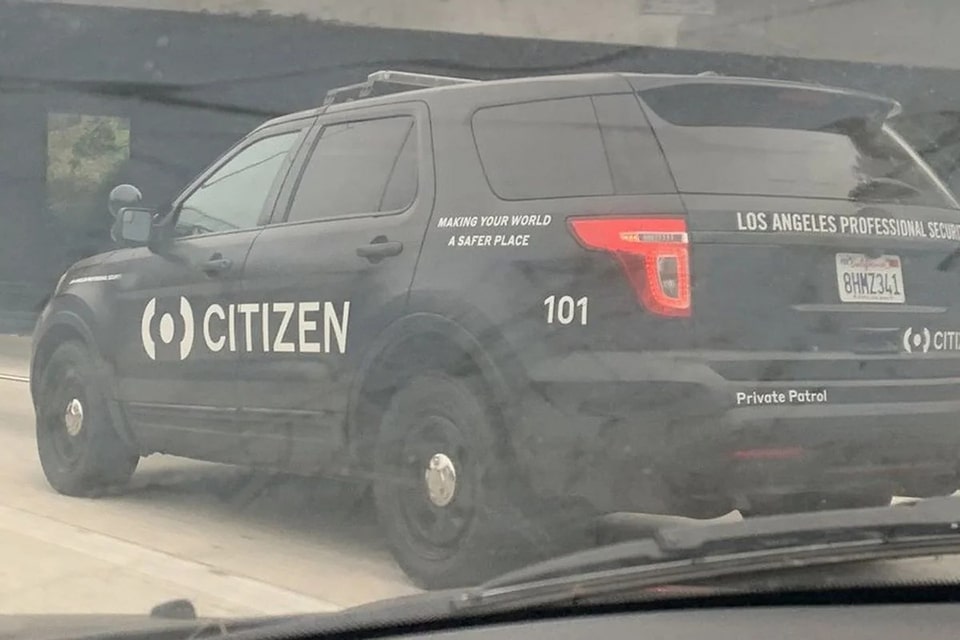
Another company -that is less police-like compared to them- is MyLocalBobby in London. They are serving. I say police-like because these companies didn't try to be private police. They did not intend this. They just planned to mobilize private security. It's not just about prosecuting criminals. Private security is much more expensive than police. Because the police provides security in a distributed manner. Security does the opposite.
These companies are not Anarcho Capitalist. I doubt they've even heard of libertarianism. They developed this idea completely independently. Citizen must have shelved the project when they realized that they really needed to be a police to get the ideal price level. You can't compete with private security unless you're a police. And if you're a police, you don't compete with private security. That market is already taken. It will still be expensive for the average person in a service between the two sectors. They aimed at this point. Somewhere between the two sectors. That's probably why the project ended before it even started. MyLocalBobby succeeds because they doesn't target the average people. They're police-like, but they're just a simple security company.
So how can a private company become a police/court company? Moreover, without prison?
First of all, I should emphasize that none of what I wrote is legal advice. I am not a lawyer. I am writing based on my own knowledge and internet research. I may be wrong.
People are not required to report crimes to the state police, with some exceptions.
Generally speaking, most people are under no legal obligation to report a crime, whether they knew about it in advance, witnessed its commission, or found out about it after the fact. However, there are exceptions to this law that you ought to know about.
Exceptions are very few. In fact, most crimes do not report to the police:
In its annual survey, BJS asks crime victims whether they reported their crime to police or not. In 2019, only 40.9% of violent crimes and 32.5% of household property crimes were reported to authorities. BJS notes that there are a variety of reasons why crime might not be reported, including fear of reprisal or “getting the offender in trouble,” a feeling that police “would not or could not do anything to help,” or a belief that the crime is “a personal issue or too trivial to report.”
Also:
Moreover, issues of police aggression and its desirability can be thought of as calculation problems. Some will argue that police need qualified immunity, which protects them from civil liability, so that they will not be hesitant to use force when necessary. Others respond that this encourages police to use more force than is actually needed. Not being able to calculate the value of more aggressive policing, state police are in the dark. However, entrepreneurs providing security in the market, being civilly liable for damages their employees cause, will strive to find the balance between aggressive policing and minimizing civil liability that consumers desire. To a degree far greater than state police, private companies face real consequences from consumers when they use force unnecessarily, as United Airlines is coming to realize.
The vast majority of crime reports to the police remain unresolved:
Most of the crimes that are reported to police, meanwhile, are not solved, at least based on an FBI measure known as the clearance rate. That’s the share of cases each year that are closed, or “cleared,” through the arrest, charging and referral of a suspect for prosecution, or due to “exceptional” circumstances such as the death of a suspect or a victim’s refusal to cooperate with a prosecution. In 2019, police nationwide cleared 45.5% of violent crimes that were reported to them and 17.2% of the property crimes that came to their attention.
Due to the unnecessary seriousness and weight of the bureaucracy, people hesitate to report to the state's justice system. And they prefer not to report at all, as they will not get results when they report. Apart from all that, many people also don't want criminals to suffer poor prison conditions. And the destruction of a person's life for committing a crime. When everything comes together, the state's justice system is slow, scary, unnecessary, expensive, inefficient, meaningless and to some people, cruel.
Also, prisons are expensive. Very expensive.
The U.S. spends $81 billion a year on mass incarceration, according to the Bureau of Justice Statistics, and that figure might be an underestimate. In 2017, the Prison Policy Initiative estimated the actual cost on state and federal governments and impacted families is roughly $182 billion. Those dollars go to staffing the criminal justice system and meeting the basic needs of the more than 2 million Americans who are incarcerated.
I said it: The more you study the prison system, the more convinced you will be that it is very bad. Let me put it this way: How many millions would be in prison if everyone reported crimes? 4 MILLION! Well, what if every crime report was resolved? Of course, most crimes result from criminals committing more than one crime. But everyone has had a fight or been beaten once in their life, right? Are you going to put everyone in jail?
At any one time, nearly 6.9 million people are on probation, in jail, in prison, or on parole in the United Sates. Each year, more than 600,000 individuals are released from state and federal prisons. Another 9 million cycle through local jails. More than two-thirds of prisoners are rearrested within 3 years of their release and half are reincarcerated.
At first glance, it may seem that these people deserve to be there despite everything. But this couldn't be more wrong. The community supervision and the rehabilitation system terrible. No, I'm not even talking about their ineffectiveness.
Community supervision, which includes probation, parole, and pretrial supervision, is often seen as a “lenient” punishment, or as an ideal “alternative” to incarceration. But while remaining in the community is certainly preferable to being locked up, the conditions imposed on those under supervision are often so restrictive that they set people up to fail. The long supervision terms, numerous and burdensome requirements, and constant surveillance (especially with electronic monitoring) result in frequent “failures,” often for minor infractions like breaking curfew or failing to pay unaffordable supervision fees.
In 2016, at least 168,000 people were incarcerated for such “technical violations” of probation or parole — that is, not for any new crime. Probation, in particular, leads to unnecessary incarceration; until it is reformed to support and reward success rather than detect mistakes, it is not a reliable “alternative.”
prisonpolicy.org (The fifth myth)
And jails:
Misdemeanors: Minor offenses with major consequences
The “massive misdemeanor system” in the U.S. is another important but overlooked contributor to overcriminalization and mass incarceration. For behaviors as benign as jaywalking or sitting on a sidewalk, an estimated 13 million misdemeanor charges sweep droves of Americans into the criminal justice system each year (and that’s excluding civil violations and speeding). These low-level offenses account for over 25% of the daily jail population nationally, and much more in some states and counties.
It is not possible to examine the entire justice system in detail. (At least for average person.) But it's perfectly reasonable to assume that every single step of the system is this bad.
-
Punishing things that are not crimes. (NAP)
-
Inability to prevent crimes.
-
Punish very-simple/simle crimes with imprisonment.
-
Too long punishment.
-
Not being able to identify persons who are rehabilitated.
-
Inability to rehabilitate criminals.
-
Making criminals more criminal.
-
Imprison as many criminals as possible.
It's like a giant monster. What's worse: It's worse if a bureaucrat is claiming that these people really should be in jail. Because why should people have to pay for them? Fortunately, such a thing cannot be claimed. If they had the capacity to imprison 10 million people, they would! The only reason they're releasing people is because there's no room inside. Not that they have a criteria.
When we think of prisoners, we think of extreme violence. However, this is not true. Get rid of the perception that people in prison are too dangerous to be kept out of prison. This is not true. We can punish and rehabilitate them in much better ways than jail. Of course, we want to remove serious criminals from our environment. We can do that better outside of jail, too. We can do this with a hard boycott, that is, with exile.
I think there would be no prison in the free market justice system, even if there were no state barriers. At least for most crimes. Because prison is expensive. People have no motivation to punish the offender after the crime has been committed. -Revenge is irrelevant- They don't want to pay for criminal. They want compensation for damage and a guarantee that there will be no recidivism. But rehabilitation facilities are more expensive. It is not necessary to spend money to rehabilitate criminals. Boycott them. Make the products/services they want to buy expensive. So that they have to go into exile.
Well, isn't that more cruel? No it is not. Let's talk about how to do it first.
Justice company subscribers choose which crimes they consider serious and how serious they are. For example, he/she may want to boycott the criminal by only 5 percent for a simple fight. But 50% for a scammer. That is, by raising the prices of purchased products and services.
The identities & crimes of criminals do not need to be disclosed to customers. A facial recognition program can tell you that the scanned face belongs to a criminal you want to boycott. For example, the same criminal may appear as 13% to John and 20% to Bob. (In fact, it is better if just the person is determined to be guilty. Businesses require that criminals can only pay by credit card. So they don't know how many percent they boycotted the criminal.)
People will boycott criminals unless they can prove they will not commit crimes again. There will be companies that check this. Criminals who want to be rehabilitated go to these companies. The expense belongs to criminals and foundations. People reduce or remove the boycott when companies they trust give their approval.
Deportation of criminals who refuse to be rehabilitated and serious offenders who have not been rehabilitated is a good thing. With the boycott. Those who do not boycott them will also be boycotted. Thus, serious criminals will be concentrated in certain isolated parts of the country. Just high prices for simple criminals. Exile for serious crimes. Prices so high that they lead to exile for serious crimes.
That's interesting. Because it actually means you can sentence someone to death in accordance with state law. By not selling him anything. And by not buying anything from him. He will starve.
This should be the system that the free market will implement. (I don't know if anyone has written this before.)
So people have no motivation to operate a prison. Instead, they will want the money to be spent on preventing new crimes from occurring, and deporting the criminals. (Boycotting someone means you're giving up on making money. So you are passively spending money.)
To summarize:
-
The main consumer demand is to prevent crime, not punish it.
-
People's demand is a system that will detect criminals very quickly and effortlessly.
-
Measuring whether criminals are reformed should be left to the free market.
-
The monetary penalty is equivalent to imprisonment. It even equates to the death penalty.
Wouldn't this system condemn serious criminals to living in a crime city from which they could never get out? They can be kept safe much cheaper and more efficiently than in prison. They also have to work and earn money. They cannot steal from other criminals and they cannot kill them. Because criminals of equal rank group together in the same places. They have to try to establish a normal life.
In fact, once this system is implemented, crimes will decrease so much that they will be very few in number. Because you spend money on preventing crimes before they happen and spotting simple criminals before they become serious criminals. And but yes. No one cares what happens to those people. And this is not cruelty.
So this will be the punishment system of companies: Boycott.
Peaceful and lawful. At least it's legal in the U.S. Let me know if I'm wrong.
***
Legally taking over the justice system is possible because people do not have to report crimes to the state.
Let's say John robbed my house. I don't have to report to the state police. I can report to the private justice system, which I think is better.
The justice company sends John a message: If you do not agree to be tried by us, we will tried you in the state court.
John has a vested interest in accepting this.
-
There will be no crime on his record.
-
Punishment will be more merciful than prison.
-
The system that ensures their acceptance back into society will be much more advanced.
-
Those who do not accept will be punished twice. Boycott by us, prison by the state.
What is even more interesting is that if reporting was mandatory, nothing would have changed. Because there are so many crimes that the state justice system cannot handle. There would be no meaningful difference as the state could not compete with the private justice system.
However, there is no such risk for America.
Private police can do anything private security can do for security. Because there is no difference other than the name. Private police can prevent suspects attacking customers, can protect customers. (In public & private spaces) They are agents of the client and thus are extended the same rights as the customers would have. They can force persons out of private property. And they can shoot attackers to save customers from dying. There is no difference in authority between private security and an ordinary citizen. Anyone can help people who are in request. Of course, there is authorized private security. But this is limited and it is obvious that the state will not specifically authorize us. Fortunately we don't need it.
There's a licensing barrier, but it's not a big deal. The license topic is laughable. Apparently to prevent violence against people. When we consider that the same requirements exist in state policing, it is clear what prevents violence.
This is why private policing may be possible in the country where citizens have the most rights. In the United States. Also, our job will be easier if the Supreme Court blocks states that do not allow people to carry guns in public. We can work in permitted states even if the case does not yield a positive verdict.
In fact, in many crimes, forcefully arrests can be made to turn the criminals over to the state police. But we will not use this method except in serious situations.
Under common law every citizen, like the law enforcement officer, has a right to make an arrest. A private citizen can make an arrest for a criminal offense without a warrant if the arrested person has committed a felony in his/her presence or if the arrested person has committed a felony offense outside the presence of the citizen but the arresting person has reasonable cause to believe that a felony has been committed. The scope of a citizen's arrest power is similar to that of a law enforcement officer. However, a citizen's arrest is always made at the arrestor's own risk. That is, if the arrest proves to be unlawful, the arrestor is exposed to the risk of criminal or civil liability. A private police officer is subject to these limitations and must balance the need to protect the interests of his employer with the need to avoid making false arrests.
The point I bolded is also laughable. This is the reason why people are afraid of the state police.
The method we will use in police companies is the same as the method that justice companies will use. Criminals will voluntarily want to be arrested. It sounds weird. But otherwise they will be handed over to the state police. They will be tried in state court. That's why criminals will prefer the private justice system. They will sign a contract voluntarily. That way, there will be no barriers to legally arresting them. (Of course, it is not true to call it voluntary, as there is a threat of punishment by the state if they do not sign the contract "voluntarily". I mean legally self-consent.) In fact, we can put them in private prisons in the same way. It's not necessary for the reasons I described. Still, this is interesting. If you don't request to go out, I can put you in a cell. This is not a crime. We will only use cells in private police stations. And not for long term use. But if you want to have the criminals jailed for a few months, you can. State laws have a long timeout period. Even years long. But also this reduces the desire of criminals to prefer this system. So this is not the method we will use. Maybe with some exceptions.
In a nutshell, criminals will voluntarily waive their state laws. They will sign a legal contract. As long as they do not withdraw from the contract, we will be authorized.
But will people take the private police seriously? Will cars patrolling the streets really be effective? There isn't enough research on private security in the public spaces. Here is an article's abstract. Unfortunately I couldn't read it as it was behind a paywall.
Only a few studies have examined how private security guards operate in public spaces. In order to address this gap, this paper examines a public/private partnership of installing security guards on a public square in Aarhus, Denmark. This was a response to the presence of a group of homeless and marginalised alcohol and drug users. The policing of the public square was investigated through document analysis, interviews with different stakeholders and observations with a patrolling security guard. The case study illustrates that private security guards are able to exercise considerable control in public spaces, without having any legal authority over these spaces. Furthermore, by drawing on the analytical framework of governmentality studies, the case illustrates how the security guards were engaged in practices of ‘soft power’ in their policing of the public square. This constitutes a contribution to the growing literature that has started to survey the different powers and resources at the disposal of private security.
It's just private security. What about private police? There is no reason why people should not take the private police seriously. Private police protect from criminals, use weapons, patrol and intervene. Yes, they has no legal authority. But they has authority when persons demand it. Let's say someone is beating someone. The private police are there. It doesn't matter, even if He's not pre-contracted. Will the potential customer not request for help? Verbal agreements are also sufficient. Well? What sets he apart from the police? Can't he chase criminals after the crime has been committed? No.
After a crime is committed, even if it involves armed robbery, once a criminal actor flees the situation the crime is over. Your desire for retribution or revenge has nothing to do with it in the eyes of the legal system. Once the threat is over, the justification for lethal force is over. If you pursue a fleeing criminal that just stole something from you, the law now sees you as the aggressor that is starting a separate fight. You might not like it, but this is how the law views the circumstance.
Being the aggressor that starts the problem is never good for you under the scrutiny of the legal system. Upon making contact with a fleeing criminal actor, you will be held accountable for any force that transpires. If everything goes well and you tackle and detain a robber or shoplifter you may be hailed a good Samaritan. What if things get violent and you end up using force? What happens if that action results in significant injury or death for the fleeing criminal? You may face severe legal repercussions.
It looks scary. But it is not. Note that this is written for average person. It's not different from the previous ones. Private police can chase the criminal. But they cannot arrest by force. Same thing.
Most criminals have no motivation to make an big effort to escape the private police. They will not be punished with prison. And not serious enough to warrant shooting. They will have much more motivation to give up. They will not be prosecuted in the state justice system. Of course, many will still flee. But note the point I highlighted though.
Will people take the private police seriously? From the people's & criminals point of view, there is no difference between the private police and the state police. Both have the same psychological effect. Because both are really prosecuting. Differently, but it doesn't matter.
Imagine you are a state cop. Both the people and the criminals don't want you. They don't call you when a crime is committed.
We need lawyers to examine all these subjects.
An article from my old reddit account.
Diğer anarşilerden farklı olarak, Anarko Kapitalizmin gerçekleşmesi için bir devrime ihtiyacı yoktur. Yasal olarak şirket kurabiliriz. Yasal olarak polis ve mahkeme şirketleri kurabiliriz. Elbette insanları zorla tutuklayıp hapse atamazlar. Sadece boykot yaparak cezalandırabilirler. Ancak devlet polisinin yapabildiği çoğu şeyi, özel polis de yasal olarak yapabilir. Buna kalıcı olarak izin veren yasaları olan tek devlet muhtemelen Amerika Birleşik Devletleri'dir. Bu makalenin ana konusu budur.
Bazılarına göre, Ankap toplumunu ilan edilerek yaratılamaz. Zamanla kendini kanıtlayarak oluşur. Bir gün birileri bu şirketleri kuracak. İnsanlar, şirketlerin devletten çok daha iyi olduğuna ikna oldukça devlet daha da küçülecek. İşte Ankapistan böyle kurulacak.
İlk akla gelen, insanlar zaten polise ve mahkemeye vergi ödediği için, daha iyi ve ucuz olsa bile insanların bunlara abone olmayacağıdır. Ancak bu yazıda bunun yanlış olduğunu da savunuyorum. Hizmet çok ucuz ve çok kaliteli olabilir. İnsanlar vergi ödeseler bile abone olabilirler.
Bunun 4 nedeni var. En önemlisini sona sakladım.
Madde 1: Mağdursuz suçların, özellikle de uyuşturucuların (uyuşturucu suçları: amerikan cezaevi nüfusunun %20'si), özel şirketler tarafından kovuşturulmayacağı gerçeği . Silah, seks, uyuşturucu ve alkol mağdursuz suçlardan bazılarıdır. Yine de cezaevindeki suçluların büyük çoğunluğu mal ve şiddet suçlarından dolayı cezaevinde bulunuyor. Polise bildirilen en yaygın suçlar şunlardır: Hırsızlık (%60), Soygun (%18), Motorlu Taşıt Hırsızlığı (%10), Ağır Saldırı (%7), Gasp (%3). Yani ~%98. Mağdursuz suçlarla uğraşmamak maliyeti önemli ölçüde azaltır. Bu, zamanınızı ve enerjinizi en önemli konulara yönlendirmenizi sağlar.
Burada dikkat çekmek istediğim bir diğer konu ise "Şiddet veya cinsel suçlardan dolayı cezaevinde bulunan kişilerin tahliye edilemeyecek kadar tehlikeli olduğu" görüşünün ne kadar yanlış olduğudur.
Çoğu suç mağdurunun isteği daha fazla hapsetmek değildir . Ulusal anket verileri, mağdurların çoğunun, daha fazla zarara neden olan hapishane sistemlerine daha fazla yatırım yapmak yerine, suçun temel nedenlerini ele alan, şiddetin önlenmesi, sosyal yatırım ve hapsetmeye alternatifler istediğini gösteriyor.
- jailpolicy.org (Dördüncü efsane)
Cezaevi sistemini ve tutukluluk koşullarını ne kadar incelerseniz, bunların hatalı olduğuna o kadar ikna olursunuz. Bu nedenle, bizim görevimiz cezaevi dışında bir rehabilitasyon ve cezalandırma sistemi oluşturmaktır. Tüketici talebi, suçluları hapse atmakla ilgili değil. Tüketici talebi, zararın tazmin edilmesi ve failin bir daha suç işlemeyeceğinin taahhüt edilmesidir.
Suçluları hapse atamamak, bize çok daha modern ve gelişmiş bir sistem geliştirme fırsatı veriyor. Bu konuyu yazının ilerleyen kısımlarında daha ayrıntılı olarak ele alacağım.
Madde 2: Devletin her alandaki verimsizliği, polis ve adliye alanlarında da mevcut. Kapsamlı bir araştırma yapmadan verimsizliğin ne ölçüde olduğunu bilemeyiz . -Aslında, araştırmayla hiçbir sonuç bulunamaz; ancak basit tahminlerde bulunulabilir.- Ama diğer alanlardaki (geçmişte kamu olan, şimdinin özel sektörleri) emsallerine baktığımızda, hiç de az olmadığını tahmin edebiliriz.
Mises'in argümanı, üretim araçlarında özel mülkiyet olmadan, sermaye malları için piyasa fiyatlarının olamayacağı ve dolayısıyla sermaye mallarını diğer mallar yerine belirli malları üretmek için kullanmanın fırsat maliyetlerini hesaplamanın mümkün olmayacağı yönündeydi. Merkezi planlamacıların neyin, hangi araçlarla üretileceğine dair kararları keyfi ve kaotik olacaktır.
Devlet polisliği bürokratik olarak, piyasa fiyatları, kar ve zarar olmaksızın sağlandığı için, polisin kaynakları en yüksek değere sahip kullanımlarına tahsis edip etmediğini bilmesine imkan yoktur. Polisin hangi sorunlara odaklanacağına tüketiciler karar vermek yerine bürokratlar ve politikacılar karar veriyor.
Madde 3: Devletin çağa ayak uyduramaması nedeniyle kullanılmayan teknolojileri adalet sistemine entegre edebiliriz. Adalet sisteminde devrim yapabiliriz. Özelleştirilmiş adalet sistemi, yazılım sektörüyle iç içe olacak.
Madde 4 ve en önemlisi: Mümkün olmasına rağmen, devletin bilinçli olarak kullanmayacağı ileri teknolojiler geliştirebiliriz.
Teknolojiden bahsetmeden önce, özel şirketlerin nasıl işleyeceğinden ve pazardan bahsedelim.
Dünyanın çoğu ülkesinde özel güvenlik çalışanlarının sayısı, polisten fazladır.
Özel koruma, gözetleme ve silah taşımacılığı da içeren özel güvenlik hizmetlerine yönelik küresel pazarın şu anda tahmini 235 milyar dolar değerinde olduğu ve 2030 yılına kadar 338 milyar dolara ulaşması bekleniyor.
Ama onlar bizim rakibimiz değiller. Devlet rakiptir. Özel güvenliğe ingilizcede özel polis denilse de, o özel güvenliktir. Bugüne kadar özel polise en yakın işi planlayan şirket ortaklığına Citizen (7 milyon kullanıcılı uygulama) & LAPS adı veriliyor . Citizen uygulamasının logosunu ve "Dünyanızı Güvenli Bir Yer Haline Getiriyoruz" metnini taşıyan bir SUV, Los Angeles'ta görüldü. Ancak, o zamandan beri bu hizmeti başlatma planlarının olmadığını belirttiler .
Bu şirketler Anarko Kapitalist değil.
Onlara göre daha az polise benzeyen bir diğer şirket ise Londra'daki MyLocal Bobby'dir. Hizmet ediyorlar. Polis benzeri diyorum çünkü bu şirketler özel polis olmaya çalışmadı. Bunu planlamadılar. Sadece özel güvenliği hareket eder hale geçirmeyi planladılar. Bu sadece suçluların yargılanmasıyla ilgili değil. Özel güvenlik polise göre çok daha pahalıdır. Çünkü polis güvenliği dağınık bir şekilde sağlıyor. Güvenlik ise tam tersini yapıyor.
Bu şirketler Anarko Kapitalist değil. Özgürlükçülüğü duyduklarından bile şüpheliyim. Bu fikri tamamen bağımsız olarak geliştirdiler. Citizen, ideal fiyat seviyesine ulaşmak için gerçekten polis olması gerektiğini anlayınca projeyi rafa kaldırmış olmalı. Polis değilseniz özel güvenlikle rekabet edemezsiniz. Ve eğer polisseniz özel güvenlikle rekabet etmezsiniz. O pazar çoktan kapılmış durumda. İki sektör arasındaki hizmet ortalama bir kişi için hâlâ pahalı olacaktır. Bu noktayı hedef aldılar. İki sektör arasında bir yerde. Muhtemelen projenin daha başlamadan bitmesinin nedeni de budur. MyLocalBobby başarılı çünkü ortalama insanları hedef almıyor. Polis gibidirler ama sadece basit bir güvenlik şirketidirler.
Peki, özel bir şirket nasıl polis/mahkeme şirketine dönüşebilir? Üstelik hapishane olmadan mı?
Öncelikle şunu belirtmeliyim ki yazdıklarımın hiçbiri hukuki tavsiye değildir. Ben avukat değilim. Kendi bilgilerime ve internet araştırmalarıma dayanarak yazıyorum. Yanılıyor olabilirim.
Bazı istisnalar dışında, kişilerin suçları devlet polisine bildirmeleri gerekmiyor.
Genel olarak konuşursak, çoğu insan, ister önceden bilsinler, ister işlendiğine tanık olsunlar, ister olaydan sonra öğrenmiş olsunlar, bir suçu ihbar etme konusunda yasal bir yükümlülüğe sahip değildir. Ancak bu yasanın bilmeniz gereken istisnaları vardır.
İstisnalar çok azdır. Aslında, çoğu suç polise bildirilmez:
BJS yıllık araştırmasında suç mağdurlarına suçlarını polise bildirip bildirmediklerini soruyor. 2019 yılında şiddet içeren suçların yalnızca %40,9'u ve ev eşyalarına ilişkin suçların %32,5'i yetkililere bildirildi. BJS, misilleme korkusu ya da "failin başını belaya sokma", polisin "yardım etmek için hiçbir şey yapmayacağı ya da yapamayacağı" hissi ya da suçun bildirilmemesinin çeşitli nedenleri olduğunu belirtiyor. Suçun "kişisel bir sorun veya rapor edilemeyecek kadar önemsiz" olması.
Ayrıca:
Dahası, polis saldırganlığı ve bunun arzu edilirliği konuları hesaplama problemleri olarak düşünülebilir. Bazıları polisin, gerektiğinde güç kullanmaktan çekinmemesi için kendisini hukuki sorumluluktan koruyan nitelikli dokunulmazlığa ihtiyacı olduğunu savunacak. Diğerleri ise bunun polisi gerçekte ihtiyaç duyulandan daha fazla güç kullanmaya teşvik ettiğini söylüyor. Daha agresif polislik uygulamalarının değerini hesaplayamayan devlet polisi karanlıkta kaldı. Bununla birlikte, piyasada güvenliği sağlayan ve çalışanlarının neden olduğu zararlardan hukuki olarak sorumlu olan girişimciler, agresif polislik ile tüketicilerin arzuladığı hukuki sorumluluğun en aza indirilmesi arasındaki dengeyi bulmaya çalışacaklardır. United Airlines'ın da farkına varmaya başladığı gibi, özel şirketler gereksiz yere güç kullandıklarında tüketicilerden kaynaklanan gerçek sonuçlarla devlet polisinden çok daha fazla karşılaşıyorlar.
Polise iletilen suç ihbarlarının büyük çoğunluğu çözümlenmemiş durumda:
Bu arada polise bildirilen suçların çoğu, en azından temizlenme oranı olarak bilinen FBI tedbirine göre çözülmedi . Bu, her yıl bir şüphelinin tutuklanması, suçlanması ve kovuşturmaya sevk edilmesi yoluyla ya da bir şüphelinin ölümü veya mağdurun işbirliği yapmayı reddetmesi gibi "istisnai" koşullar nedeniyle kapatılan veya "açıklanan" davaların payıdır. 2019'da ülke çapında polis, kendilerine bildirilen şiddet suçlarının %45,5'ini ve dikkatlerine gelen mülk suçlarının %17,2'sini temizledi.
Bürokrasinin gereksiz ciddiyeti ve ağırlığı nedeniyle, insanlar devletin adalet sistemine rapor vermekten çekiniyor. Ve rapor verdiklerinde sonuç alamayacakları için hiç rapor vermemeyi tercih ediyorlar. Bütün bunların dışında, pek çok kişi suçluların kötü hapishane koşullarına maruz kalmasını da istemiyor. Ve bir kişinin suç işlemesi nedeniyle hayatının mahvolması insanlara yanlış geliyor. Her şey bir araya gelince, devletin adalet sistemi yavaş, korkutucu, gereksiz, pahalı, verimsiz, anlamsız ve bazılarına göre acımasız oluyor.
Ayrıca, hapishaneler pahalıdır. Çok pahalı.
Adalet İstatistikleri Bürosu'na göre ABD, toplu hapsetmelere yılda 81 milyar dolar harcıyor ve bu rakam eksik bir tahmin olabilir. Hapishane Politikası Girişimi, 2017 yılında eyalet ve federal hükümetlere ve etkilenen ailelere gerçek maliyetin yaklaşık 182 milyar dolar olduğunu tahmin etti. Bu dolarlar ceza adaleti sisteminin personellerine ve hapsedilen 2 milyondan fazla Amerikalının temel ihtiyaçlarının karşılanmasına gidiyor .
Ben şunu söyledim: Hapishane sistemini ne kadar çok incelerseniz, onun çok kötü olduğuna o kadar ikna olursunuz. Şöyle söyleyeyim: Herkes suçları bildirseydi kaç milyon kişi hapiste olurdu? 4 MİLYON! Peki ya her suç ihbarı çözülseydi? Elbette çoğu suç, suçlunun birden fazla suç işlemesinden kaynaklanmaktadır. Ama herkes hayatında bir kez kavga etmiş ya da dayak yemiştir, değil mi? Herkesi hapse mi atacaksınız?
Amerika Birleşik Devletleri'nde herhangi bir zamanda yaklaşık 6,9 milyon kişi denetimli serbestlikte, kodeste, hapishanede veya şartlı tahliyede bulunuyor. Her yıl 600.000'den fazla kişi eyalet ve federal hapishanelerden serbest bırakılıyor. Diğer bir 9 milyon kişi ise yerel kodeslerden geçiyor. Mahkumların üçte ikisinden fazlası tahliye edildikten sonraki 3 yıl içinde yeniden tutuklanıyor ve yarısı yeniden hapsediliyor.
İlk bakışta bu insanlar her şeye rağmen orada olmayı hak ediyormuş gibi görünebilir. Ama bu daha yanlış olamaz. Topluluk denetimi ve rehabilitasyon sistemi berbat. Hayır, etkisizliklerinden bahsetmiyorum bile.
Şartlı tahliye ve duruşma öncesi denetimi içeren topluluk denetimi genellikle "hafif" bir ceza veya hapsetmeye ideal bir "alternatif" olarak görülüyor. Ancak toplulukta kalmak kesinlikle hapse atılmaktan daha tercih edilirken, gözetim altında olanlara uygulanan koşullar genellikle o kadar kısıtlayıcı ki, insanları başarısızlığa mahkum ediyor. Uzun denetim süreleri, çok sayıda ve külfetli gereklilikler ve sürekli gözetim (özellikle elektronik izlemeyle), genellikle sokağa çıkma yasağını ihlal etmek veya karşılanamaz denetim ücretlerini ödeyememek gibi küçük ihlaller nedeniyle sık sık "başarısızlıklarla" sonuçlanır.
2016 yılında en az 168.000 kişi denetimli serbestliğin veya şartlı tahliyenin bu tür "teknik ihlalleri" nedeniyle hapsedildi; yani herhangi bir yeni suç nedeniyle hapse atılmadı. Özellikle denetimli serbestlik gereksiz hapsedilmeye yol açmaktadır; Hataları tespit etmek yerine başarıyı destekleyecek ve ödüllendirecek şekilde reform yapılıncaya kadar güvenilir bir “alternatif” değildir.
jailpolicy.org (Beşinci efsane)
Ve hapishaneler:
Kabahatler: Büyük sonuçları olan küçük suçlar
ABD'deki " büyük kabahat sistemi ", aşırı suçlulaşma ve kitlesel hapsetmelere katkıda bulunan bir diğer önemli ancak gözden kaçan etkendir. Kırmızı ışıkta geçme ya da kaldırımda oturma gibi zararsız davranışlar için, tahminen 13 milyon kabahat suçlaması , her yıl çok sayıda Amerikalıyı ceza adaleti sistemine sürüklemektedir (ve bu, sivil ihlaller ve aşırı hız hariçtir). Bu düşük seviyeli suçlar, ülke genelinde günlük hapishane nüfusunun %25'inden fazlasını ve bazı eyalet ve illerde çok daha fazlasını oluşturmaktadır .
Adalet sisteminin tamamını detaylı olarak incelemek mümkün değildir (En azından ortalama bir insan için). Ancak sistemin her adımının bu kadar kötü olduğunu varsaymak son derece mantıklıdır.
Suç olmayan şeyleri cezalandırmak ( NAP ).
Suçları önleyememek.
Çok basit/basit suçları hapis cezasıyla cezalandırmak.
Çok uzun ceza süreleri.
Rehabilite edilen kişilerin tespit edilememesi.
Suçluları rehabilite edememek.
Suçluları daha da suçlu hale getirmek.
Mümkün olduğu kadar çok suçluyu hapsetmek.
Dev bir canavar gibi. Daha da kötüsü, bir bürokratın bu insanların gerçekten hapiste olması gerektiğini iddia etmesi. Daha da kötü, çünkü insanlar neden bütün bunların parasını ödemek zorunda olsun ki? Neyse ki, böyle bir şey iddia edilemez. 10 milyon insanı hapse atacak kapasiteleri olsa yapardı! İnsanları serbest bırakmalarının tek nedeni içeride yer olmaması, bir kriterleri olduğundan değil.
Mahkumları düşündüğümüzde aklımıza aşırı şiddet geliyor, ancak bu doğru değil. Cezaevindeki kişilerin cezaevi dışında tutulamayacak kadar tehlikeli olduğu algısından kurtulun. Bu doğru değil. Onları hapisten çok daha iyi yöntemlerle cezalandırabilir ve rehabilite edebiliriz. Elbette ciddi suçluları çevremizden uzaklaştırmak istiyoruz. Bunu hapishane dışında da daha iyi yapabiliriz. Bunu sert bir boykotla, yani sürgünle yapabiliriz.
Serbest piyasa adalet sisteminde devlet engelleri olmasa bile hapishanelerin olmayacağını düşünüyorum, en azından çoğu suç için. Çünkü hapishane pahalıdır. Suç işlendikten sonra insanların suçluyu cezalandırma motivasyonu yoktur. -İntikamın hiçbir önemi yok- Suçlunun cezalandırılmasının bedelini ödemek istemiyorlar, zararın tazminini ve kendilerine karşı tekrar suç işlenmeyeceğine dair garanti istiyorlar. Ancak rehabilitasyon tesisleri daha pahalıdır. Suçluları rehabilite etmek için para harcamak gerekli değildir, onları boykot edin. Satın almak istedikleri bütün ürünler/hizmetleri pahalı hale getirin, bu yüzden sürgüne gitmek zorunda kalsınlar.
Peki bu daha acımasız değil mi? Hayır, öyle değil. Öncelikle nasıl yapılacağından bahsedelim.
Adalet şirketi aboneleri hangi suçların ciddi olduğunu ve ne kadar ciddi olduğunu seçiyorlar. Mesela basit bir kavga için suçluyu sadece yüzde 5 oranında boykot etmek isteyebilir, ama bir dolandırıcı için %50. Yani satın alınan ürün ve hizmetlerin fiyatlarını artırarak.
Suçluların kimliklerinin ve suçlarının müşterilere açıklanmasına gerek yoktur. Bir yüz tanıma programı, taranan yüzün boykot etmek istediğiniz bir suçluya ait olduğunu size söyleyebilir. Örneğin aynı suçlu John'a %13, Bob'a ise %20 olarak görünebilir. (Aslında sadece kişinin suçlu olduğu tespit edilirse daha iyi olur. İşletmeler suçluların yalnızca kredi kartıyla ödeme yapmasını şart koşuyor, dolayısıyla suçluyu yüzde kaç boykot ettiklerini bile bilmiyorlar.)
İnsanlar bir daha suç işlemeyeceklerini kanıtlayamadıkları sürece suçluları boykot edeceklerdir. Bunu denetleyen firmalar olacaktır. Rehabilite edilmek isteyen suçlular bu şirketlere gidiyor. Masrafı suçlulara ve vakıflara aittir. İnsanlar güvendikleri firmalar onay verdiğinde boykotu azaltır ya da kaldırır.
Rehabilite edilmeyi reddeden suçluların ve rehabilite edilmeyen ağır suçluların sınır dışı edilmesi iyi bir şeydir. Boykot ile. Boykot etmeyenler de boykot edilecek. Böylece ciddi suçlular ülkenin bazı izole bölgelerinde yoğunlaşacak. Basit suçlular için sadece yüksek fiyatlar, ciddi suçlardan dolayı sürgün. Fiyatlar o kadar yüksek ki ciddi suçlardan cezalandırılmak sürgüne yol açıyor.
İlginç, çünkü bu aslında devlet yasalarına göre birisini ölüm cezasına çarptırabileceğiniz anlamına geliyor. Ona hiçbir şey satmayarak. Ve ondan hiçbir şey satın almayarak. Açlıktan ölecek.
Serbest piyasanın uygulayacağı sistem bu olmalıdır.(Daha önce bunu yazan var mı bilmiyorum.)
Yani insanların hapishane işletmek için hiçbir motivasyonu yok. Bunun yerine paranın yeni suçların önlenmesine ve suçluların sınır dışı edilmesine harcanmasını isteyecekler. (Birini boykot etmek, para kazanmaktan vazgeçtiğiniz anlamına gelir. Yani pasif olarak para harcarsınız.)
Özet:
Tüketicinin temel talebi suçu cezalandırmak değil, önlemektir.
İnsanların talebi, suçluları çok hızlı ve zahmetsizce tespit edecek bir sistemdir.
Suçluların ıslah edilip edilmediğinin ölçülmesi serbest piyasaya bırakılmalıdır.
Para cezası hapis cezasına eşdeğerdir, hatta ölüm cezasına eşdeğerdir.
Bu sistem ciddi suçluları asla çıkamayacakları bir suç şehrinde yaşamaya mahkum etmez mi? Hapishanede olduğundan çok daha ucuz ve daha verimli bir şekilde güvende tutulabilirler. Onların da çalışıp para kazanması gerekiyor. Diğer suçlulardan çalamazlar ve onları öldüremezler. Çünkü eşit derecedeki suçlular aynı yerlerde bir araya geliyor. Normal bir yaşam kurmaya çalışmak zorundalar.
Aslında bu sistem hayata geçirildiğinde suçlar o kadar azalacak ki sayıları çok az olacak. Çünkü suçları henüz gerçekleşmeden önlemek ve basit suçluları ciddi suçlulara dönüşmeden tespit etmek için para harcıyorsunuz. Ve ama evet, bu insanların başına ne geleceği kimsenin umurunda değil. Ve bu zulüm değil.
Yani şirketlerin ceza sistemi şu olacak: Boykot.
Barışçıl ve yasal. En azından ABD'de yasal. Yanılıyorsam bana bildirin.
***
İnsanların suçları hükümete bildirmek zorunda olmaması nedeniyle adalet sisteminin yasal olarak devralınması mümkün.
Diyelim ki John evimi soydu. Devlet polisine rapor vermek zorunda değilim. Özel adalet sistemine rapor verebilirim, ki bunun daha iyi olduğunu düşünüyorum.
Adalet şirketi John'a bir mesaj gönderdi: Eğer bizim tarafımızdan yargılanmayı kabul etmezsen, seni devlet mahkemesinde yargılayacağız.
John'un bunu kabul etmekte çıkarı var.
Sicilinde hiçbir suç olmayacak.
Ceza hapisten daha merhametli olacaktır.
Topluma yeniden kabul edilmelerini sağlayacak sistem çok daha gelişmiş olacak.
Kabul etmeyenler iki defa cezalandırılacaktır. Boykotla bizim tarafımızdan, hapishane ile devlet tarafından.
Daha da ilginci, raporlama zorunlu olsaydı hiçbir şey değişmezdi. Çünkü devletin adalet sisteminin başa çıkamayacağı kadar çok suç var. Devlet özel adalet sistemiyle rekabet edemeyeceği için anlamlı bir fark olmayacaktı.
Ancak Amerika için böyle bir risk yok.
Özel polis, güvenlik adına özel güvenliğin yapabileceği her şeyi yapabilir. Çünkü ismi dışında hiçbir farkı yok. Özel polis şüphelilerin müşterilere saldırmasını engelleyebilir, müşterileri koruyabilir. (Kamusal ve özel alanlarda) Müşterinin temsilcileridirler ve bu nedenle müşterilerin sahip olduğu hakların aynısına sahiptirler. Kişileri özel mülkiyetin dışına çıkmaya zorlayabilirler . Müşterileri ölmekten kurtarmak için saldırganları vurabilirler . Özel güvenlik ile sıradan vatandaş arasında yetki farkı yoktur.Talep eden kişilere herkes yardımcı olabilir. Elbette yetkili özel güvenlik var. Ama bu sınırlı ve devletin bize özel olarak yetki vermeyeceği de açık. Neyse ki buna ihtiyacımız yok.
Lisans engeli var ama çok da önemli değil. Lisans konusu gülünç. Görünüşe göre insanlara karşı şiddeti önlemek için. Aynı şartların devlet polisliğinde de mevcut olduğunu düşünürsek, şiddeti neyin önlediği açıktır.
Bu nedenle vatandaşların en fazla hakka sahip olduğu ülkede özel polislik mümkün olabilir: Birleşik Devletlerde. Ayrıca kamusal alanda silah taşınmasına izin vermeyen eyaletlerin Yargıtay tarafından engellenmesi işimizi kolaylaştıracaktır . Dava olumlu sonuçlanmasa bile izin verilen eyaletlerde çalışabiliriz.
Aslında birçok suçta, suçluları devlet polisine teslim etmek için zorla tutuklamalar yapılabilmektedir. Ancak ciddi durumlar dışında bu yöntemi kullanmayacağız.
Genel hukuka göre her vatandaşın kolluk kuvvetleri gibi tutuklama yapma hakkı vardır. Tutuklayan kişi, kendi huzurunda ağır bir suç işlemişse veya tutuklanan kişi, vatandaşın huzuru dışında ağır bir suç işlemişse ancak tutuklayan kişinin makul bir nedeni varsa(Bir suçun işlendiğine inanıyorsa.), sıradan bir vatandaş, herhangi bir tutuklama emri olmadan ceza gerektiren bir suçtan dolayı tutuklama yapabilir. Bir vatandaşın tutuklama yetkisinin kapsamı kolluk kuvvetlerininkine benzer. Ancak bir vatandaşın tutuklanması her zaman riski tutuklayanın kendisine ait olmak üzere yapılır. Yani, tutuklamanın hukuka aykırı olduğu ortaya çıkarsa, tutuklamayı yapan kişi cezai veya hukuki sorumluluk riskine maruz kalır. Özel bir polis memuru bu sınırlamalara tabidir ve işvereninin çıkarlarını koruma ihtiyacı ile sahte tutuklamalardan kaçınma ihtiyacı arasında denge kurmalıdır.
Kalınlaştırdığım nokta da gülünç. İnsanların devlet polisinden korkmasının nedeni budur .
Polis şirketlerinde kullanacağımız yöntem, mahkeme şirketlerinin kullanacağı yöntemle aynı. Suçlular gönüllü olarak tutuklanmayı isteyeceklerdir. Kulağa tuhaf geliyor. Ancak aksi takdirde devlet polisine teslim edilecekler ve devlet mahkemesinde yargılanacaklar. Bu yüzden suçlular özel adalet sistemini tercih edecekler. Gönüllü olarak sözleşme imzalayacaklar. Böylece yasal olarak tutuklanmalarının önünde hiçbir engel kalmayacak. (Elbette buna gönüllü demek doğru değil, çünkü sözleşmeyi "gönüllü olarak" imzalamamaları halinde devlet tarafından cezalandırılma tehdidi var. Hukuken razı olmayı kastediyorum.)Aslında onları aynı şekilde özel hapishanelere koyabiliriz. Bahsettiğim sebeplerden dolayı buna gerek yok, yine de bu ilginç. Dışarı çıkmayı talep etmezsen seni hücreye koyabilirim. Bu bir suç değil. Hücreleri sadece özel polis karakollarında kullanacağız. Ve uzun süreli kullanım için değil. Ancak suçluların birkaç ay hapse atılmasını istiyorsanız bunu yapabilirsiniz. Devlet yasalarının uzun bir zaman aşımı süresi vardır. Yıllar kadar uzun. Ancak bu aynı zamanda suçluların bu sistemi tercih etme isteklerini de azaltıyor. Yani kullanacağımız yöntem bu değil, belki bazı istisnalar dışında.
Özetle, suçlular devlet yasalarından gönüllü olarak feragat edecekler. Yasal bir sözleşme imzalayacaklar. Sözleşmeden dönmedikleri sürece biz yetkili olacağız.
Peki insanlar özel polisi ciddiye alacak mı? Sokaklarda devriye gezen arabalar gerçekten etkili olacak mı? Kamusal alanlarda özel güvenlik konusunda yeterli araştırma bulunmamaktadır. İşte bir makalenin özeti. Ne yazık ki bir ödeme duvarının arkasında olduğu için okuyamadım.
Özel güvenlik görevlilerinin kamusal alanlarda nasıl görev yaptığını inceleyen sadece birkaç çalışma bulunmaktadır. Bu boşluğu doldurmak amacıyla bu makale, Danimarka'nın Aarhus kentindeki bir kamusal meydana güvenlik görevlileri yerleştirmeye yönelik kamu/özel sektör ortaklığını incelemektedir. Bu, bir grup evsizin ve dışlanmış alkol ve uyuşturucu kullanıcılarının varlığına bir yanıttı. Kamusal meydandaki polis faaliyetleri belge analizi, farklı paydaşlarla yapılan görüşmeler ve devriye gezen bir güvenlik görevlisi ile yapılan gözlemler yoluyla araştırıldı. Vaka çalışması, özel güvenlik görevlilerinin kamusal alanlarda, bu alanlar üzerinde herhangi bir yasal yetkiye sahip olmaksızın önemli ölçüde kontrol uygulayabildiklerini göstermektedir. Ayrıca, yönetimsellik çalışmalarının analitik çerçevesinden faydalanılarak bu örnek olay, güvenlik görevlilerinin kamusal meydandaki denetimlerinde nasıl 'yumuşak güç' uygulamalarına giriştiklerini göstermektedir. Bu, özel güvenliğin tasarrufundaki farklı güç ve kaynakları araştırmaya başlayan büyüyen literatüre bir katkı oluşturmaktadır.
Sadece özel güvenlik. Peki ya özel polis? İnsanların özel polisi ciddiye almamaları için hiçbir neden yok. Özel polis suçlulardan korur, silah kullanır, devriye gezer ve müdahale eder. Evet, yasal yetkileri yok. Ancak kişiler talep ettiğinde yetkiye sahiptirler. Diyelim ki birisi birisini dövüyor. Özel polis orada. Ön sözleşme yapmamış olsa bile önemli değil. Potansiyel müşteri yardım talebinde bulunmayacak mı? Sözlü anlaşmalar da yeterlidir. Eee? Onu polisten ayıran şey nedir? Suç işlendikten sonra suçluyu kovalayamaz mı? HAYIR.
Silahlı soygun da dahil olmak üzere bir suç işlendikten sonra suçlunun olay yerinden kaçması halinde suç sona erer. İntikam veya intikam arzunuzun hukuk sisteminin gözünde bununla hiçbir ilgisi yoktur. Tehdit sona erdiğinde, öldürücü gücün gerekçesi de sona erer. Sizden bir şey çalan kaçan bir suçlunun peşine düşerseniz, kanun artık sizi ayrı bir kavga başlatan saldırgan olarak görüyor. Hoşunuza gitmeyebilir ama kanunlar olaya böyle bakıyor.
Sorunu başlatan saldırgan olmak, hukuk sisteminin incelemesi altında sizin için asla iyi değildir. Kaçan bir suçluyla temas kurduğunuzda ortaya çıkan her türlü güçten sorumlu tutulacaksınız. Her şey yolunda giderse ve bir hırsızı ya da hırsızı yakalayıp tutuklarsanız, iyi bir Samiriyeli olarak selamlanabilirsiniz. Ya olaylar şiddetlenirse ve sonunda güç kullanmaya başlarsanız? Bu eylem kaçan suçlunun ciddi yaralanması veya ölümüyle sonuçlanırsa ne olur? Ciddi hukuki yaptırımlarla karşı karşıya kalabilirsiniz.
Korkunç görünüyor, ama öyle değil. Bunun ortalama bir kişi için yazıldığını unutmayın. Öncekilerden farklı değil. Özel polis suçluyu kovalayabilir, ama zorla tutuklayamaz. Aynı şey.
Çoğu suçlunun özel polisten kaçmak için büyük bir çaba harcama motivasyonu yoktur. Hapis cezasıyla cezalandırılmayacaklar. Ve vurulmayı gerektirecek kadar ciddi değil. Vazgeçmek için çok daha fazla motivasyona sahip olacaklar. Devlet adalet sisteminde yargılanmayacaklar. Elbette birçoğu yine de kaçacak, ancak altını çizdiğim noktaya dikkat edin.
İnsanlar özel polisi ciddiye alacak mı? Halkın ve suçluların bakış açısından özel polis ile devlet polisi arasında hiçbir fark yoktur. Her ikisi de aynı psikolojik etkiye sahiptir, çünkü ikisi de gerçekten hukuksal. Farklı ama önemli değil.
Bir devlet polisi olduğunuzu hayal edin. Hem halk, hem de suçlular seni istemiyor. Suç işlendiğinde sizi aramazlar.
Bütün bu konuları inceleyecek avukatlara ihtiyacımız var.
Eski reddit hesabımdan bir makale.